

 By Gianmarco Virzì ·
 Virsion is, first and foremost, a video game development studio. For the past two years we’ve been working on our game in Unreal Engine, using Perforce for version control, the same setup as most studios of our size. And we kept running into the same problems: it wasn’t the engine’s fault, nor the server’s. It was everything around them.
With hindsight, some of these stories are almost funny. We deleted our DLSS binaries twice, because the cleanup script couldn’t tell a recompilable DLL from a vendor SDK that takes a whole morning to restore. More than once we lost hours of work to merge conflicts spread across entire plugins. Our artists learned version control the way almost all artists do: through failed submits, cryptic errors and messages asking whether someone was touching this or that file.
Tasks in one tool, chat in another, documents in a third, the calendar in a fourth, and version control off on its own. At some point we stopped taking all this for granted and started building the tool we were missing. That tool, built mainly for ourselves, has become a product. And as of today, the beta is open to the first twenty studios.
What does Gameheim do?
Gameheim orchestrates everything around the engine and your project. Tasks, calendar, chat, wiki, documents and version control live in one place and talk to each other, so a studio can run its whole production from a single hub: from indie studios to AAA.
- Rules: The studio’s conventions on assets, version control and access (locks, file types, who can do what) are applied automatically on every machine.
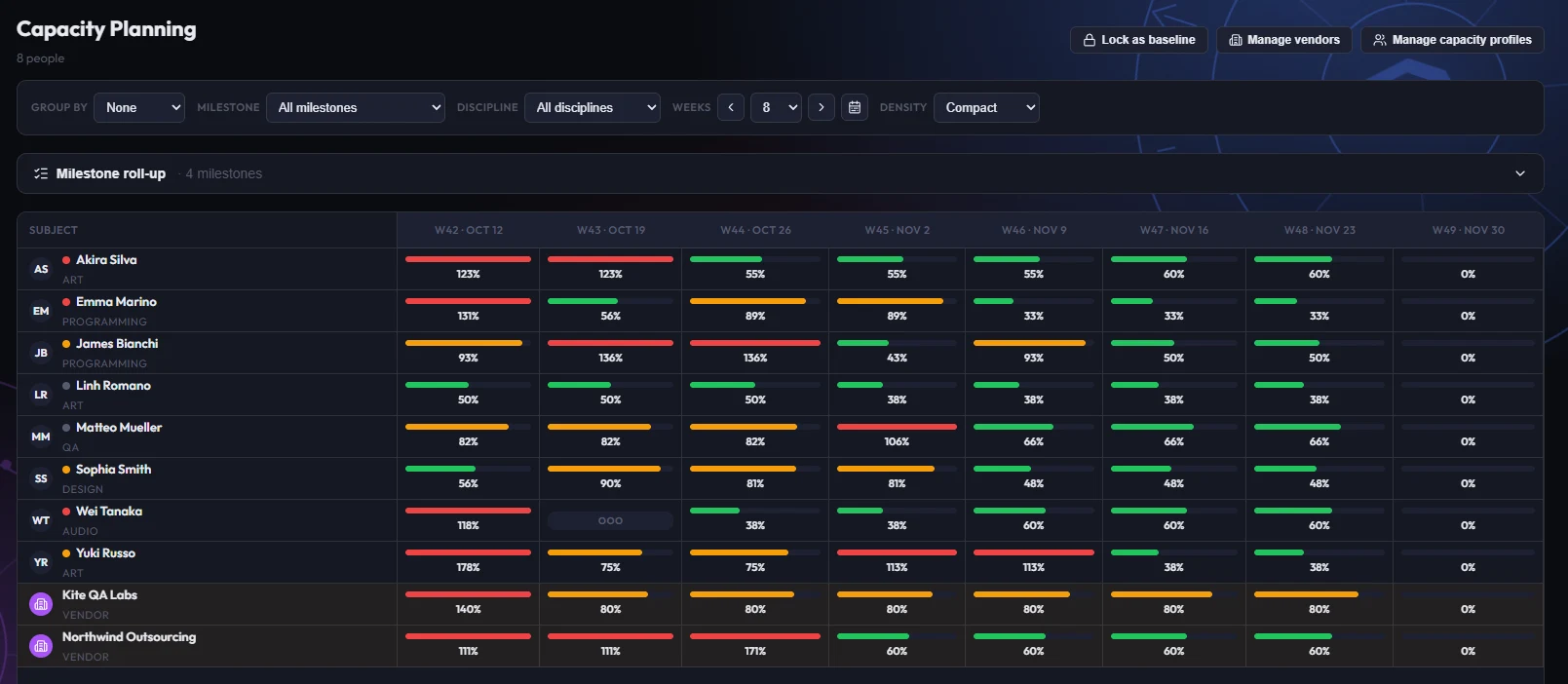
- Plan management: Capacity, tasks and people are compared with the work that actually lands in version control. Managers see the real workload of the team and of external contractors, week by week, and a shared calendar brings together deadlines, milestones, meetings and time off. A plan that no longer matches reality shows up in the first week, not after months and months of work.
- Pipeline: The milestones of every project in a single view. A delay shows up while there’s still time to react, not on the day it’s due.
- Project status: An agent on every machine checks files, sync and locks, and blocks submits that could cause conflicts before any damage is done. In particular, conflicts between plugins are detected, and you choose which copy to keep. An administrator can release a stuck lock even if the owner’s PC is switched off. (Remember the DLSS binaries we mentioned earlier? This time we learned.)
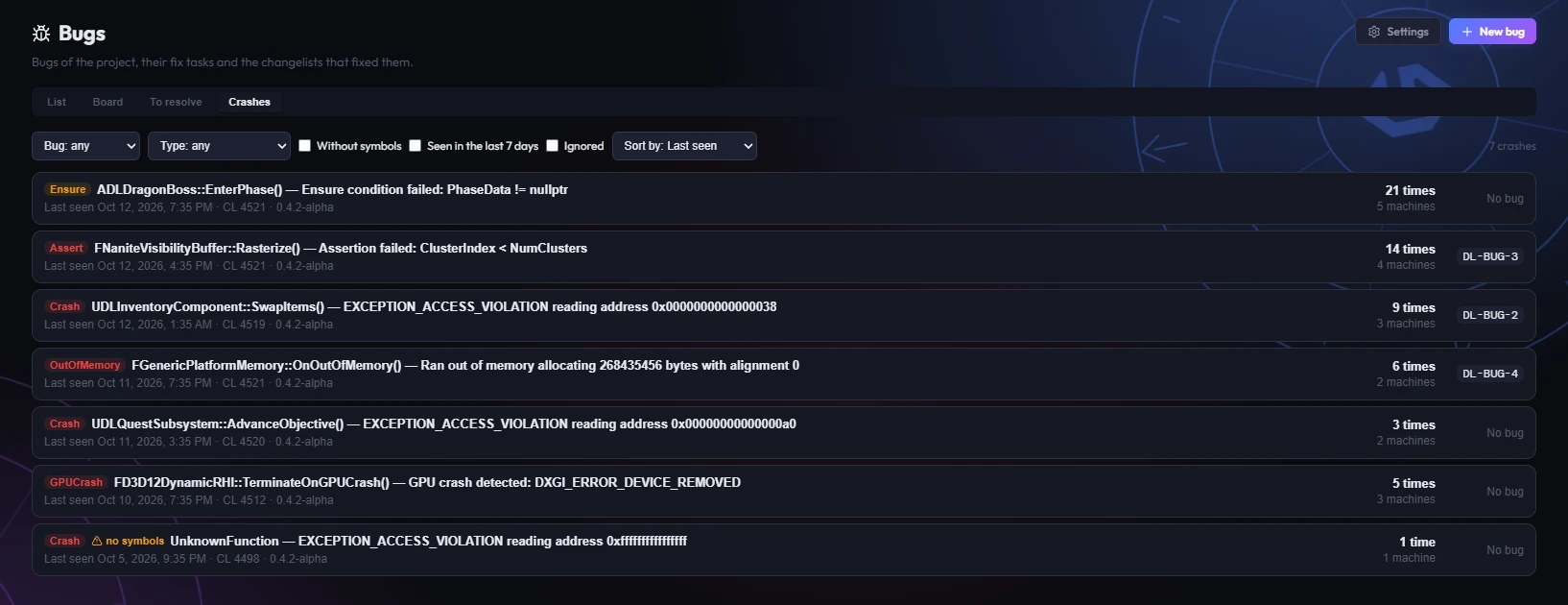
- Bugs and crashes: A bug tracker linked to tasks that receives Unreal crashes automatically. The engine’s crash reporter sends them to Gameheim, which groups them, counts them and lets you turn them into bugs. No plugin to install.
- For the creative team: Moodboards for artists, a versioned wiki for the narrative bible, and voice-acting lines tracked from the script to the approved take, in every language.
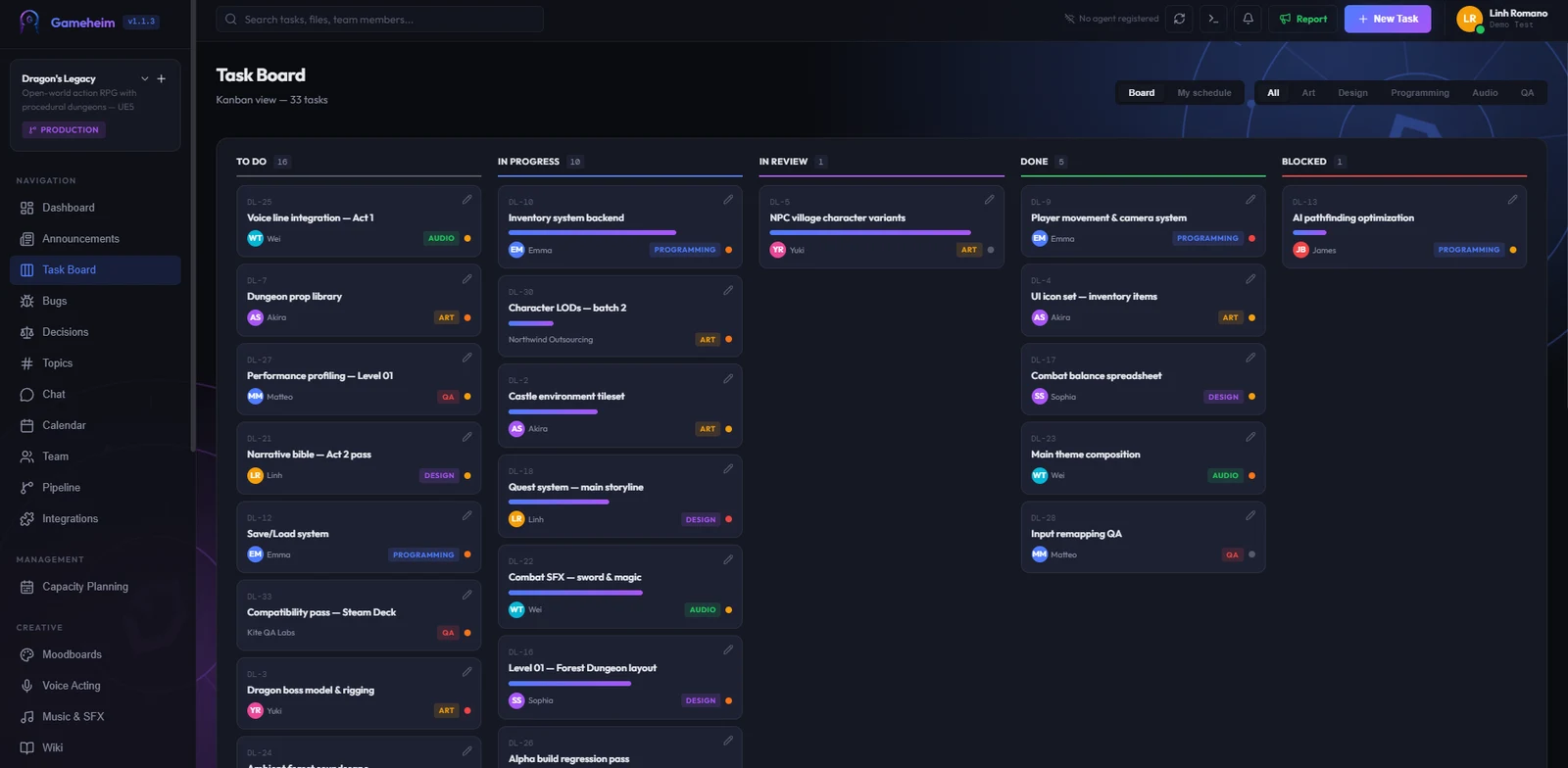
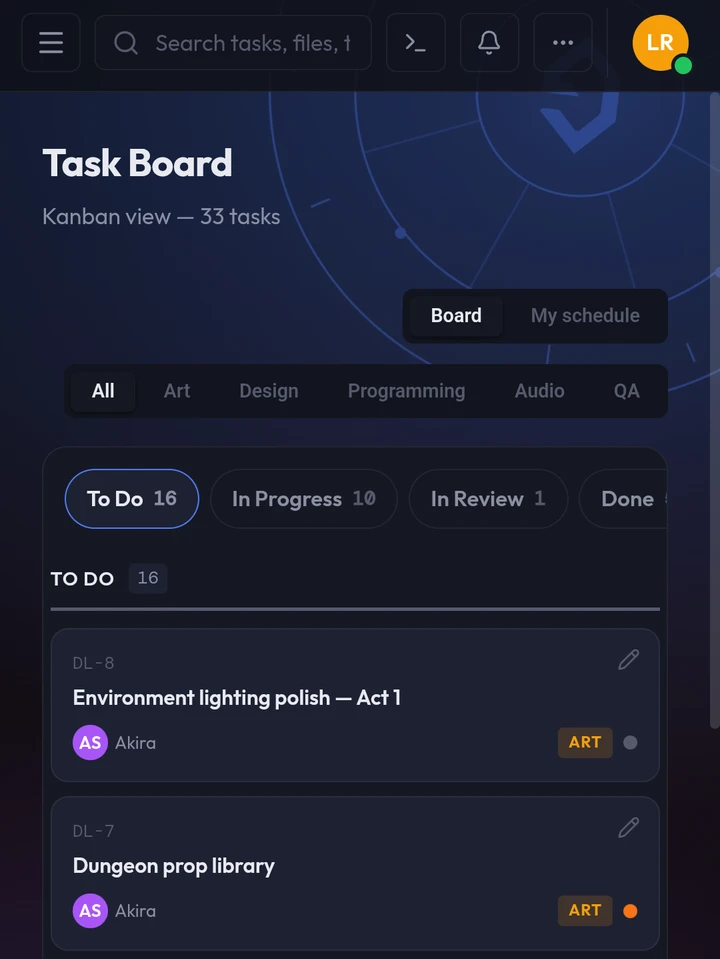
Holding it all together is a task board linked to changelists: write #ART-142 done in a changelist description (that is, the project code and the task number) and the board updates itself on submit.
And if you work with Claude, ChatGPT or Cursor, you can connect your agents to your project and ask them which bugs are still open, what has been decided about a system, or to add newly found bugs to the list of work to do. They work with your own permissions, and only in the projects you choose.
What Gameheim isn’t
Gameheim isn’t a version control system, and it doesn’t replace your engine. It works with the tools you already have: today Perforce and Git LFS, in the future Epic Games’ Lore as well. Depots, servers and build pipelines stay exactly as they are. We also wrote a guide on how to choose between Perforce and Git LFS for Unreal Engine.
Gameheim is built on real problems. We use it every day on our own production, and the artists who work with us had never used it before and never had any training. If a feature doesn’t survive use on a real project, it doesn’t ship.
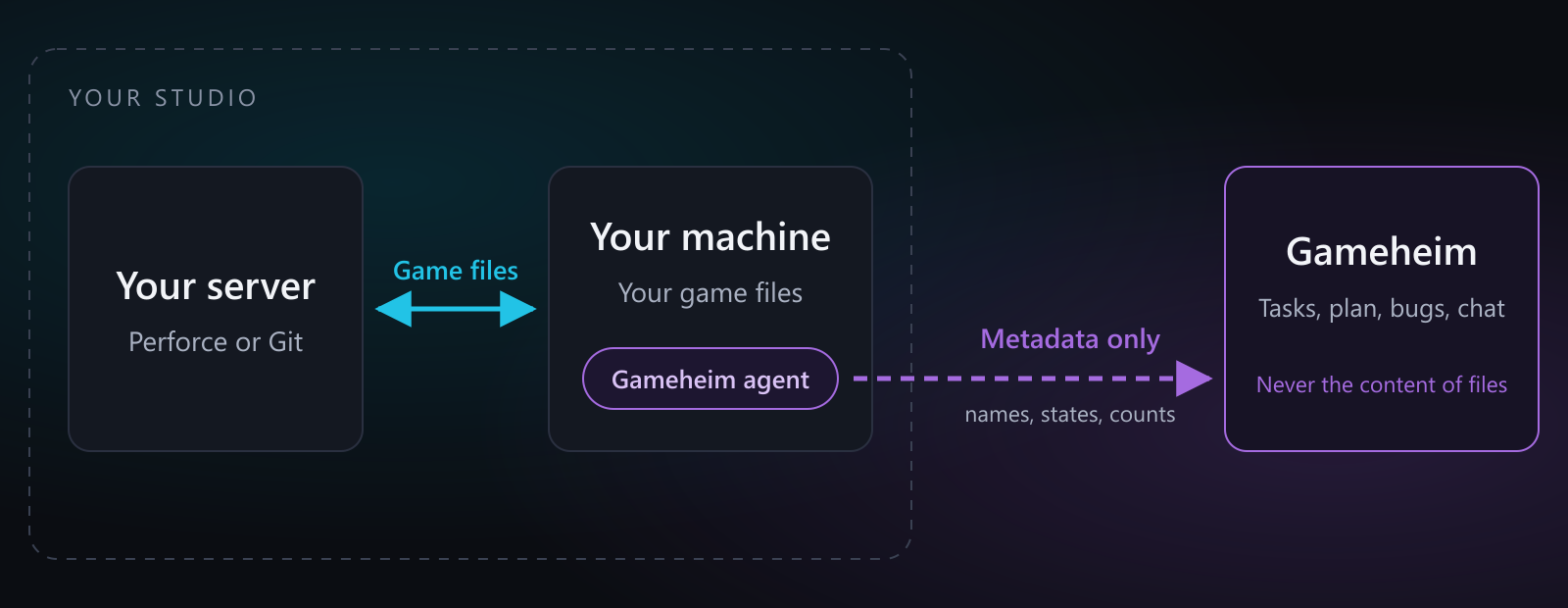
Your game files never pass through us. Gameheim works through an agent on every machine, and our service receives only metadata about your game files (names, states, counts), never their content. Sensitive metadata is encrypted with AES-256/GCM, with a unique key per organization that can be rotated manually or on a schedule. If our service is down, you keep working.
Join the beta
The open beta is free: the first twenty studios get full access for two months from sign-up. After that, a team of four on one project stays free. Setup takes a few minutes: you create your studio’s workspace, install the lightweight local agent on every machine and pair it with a one-time code. And when you’re away from your desk, the Android and iOS app brings chat, tasks, announcements and notifications to your phone. If you stop using Gameheim tomorrow, your version control server won’t even notice.
Questions, bugs, a workflow we should support? During the beta you’ll talk directly to the developers, through the “Feedback” section in the app or by writing to info@virsion-studio.com.
FAQ
Is Gameheim a version control system? No. Gameheim works with your version control, not in its place: today Perforce and Git LFS, in the future Lore as well. It adds the rules, the planning and the workflow around it.
Does it only work with Unreal Engine? No. We built it on our own Unreal production, so it knows Unreal well. Gameheim reads plugins and tells vendor binaries from generated ones, but the studio hub also works with Unity, Godot or a proprietary engine.
Is the open beta really free? Yes. The first twenty studios to sign up get full access for two months from sign-up. After that, a team of four on one project stays free.
Can I use Claude, ChatGPT or Cursor with Gameheim? Yes. You connect the assistant you already use and ask it about the project in your own words: it reads and updates tasks, bugs and decisions, and searches the documentation. Whoever administers the studio decides who can connect it.